
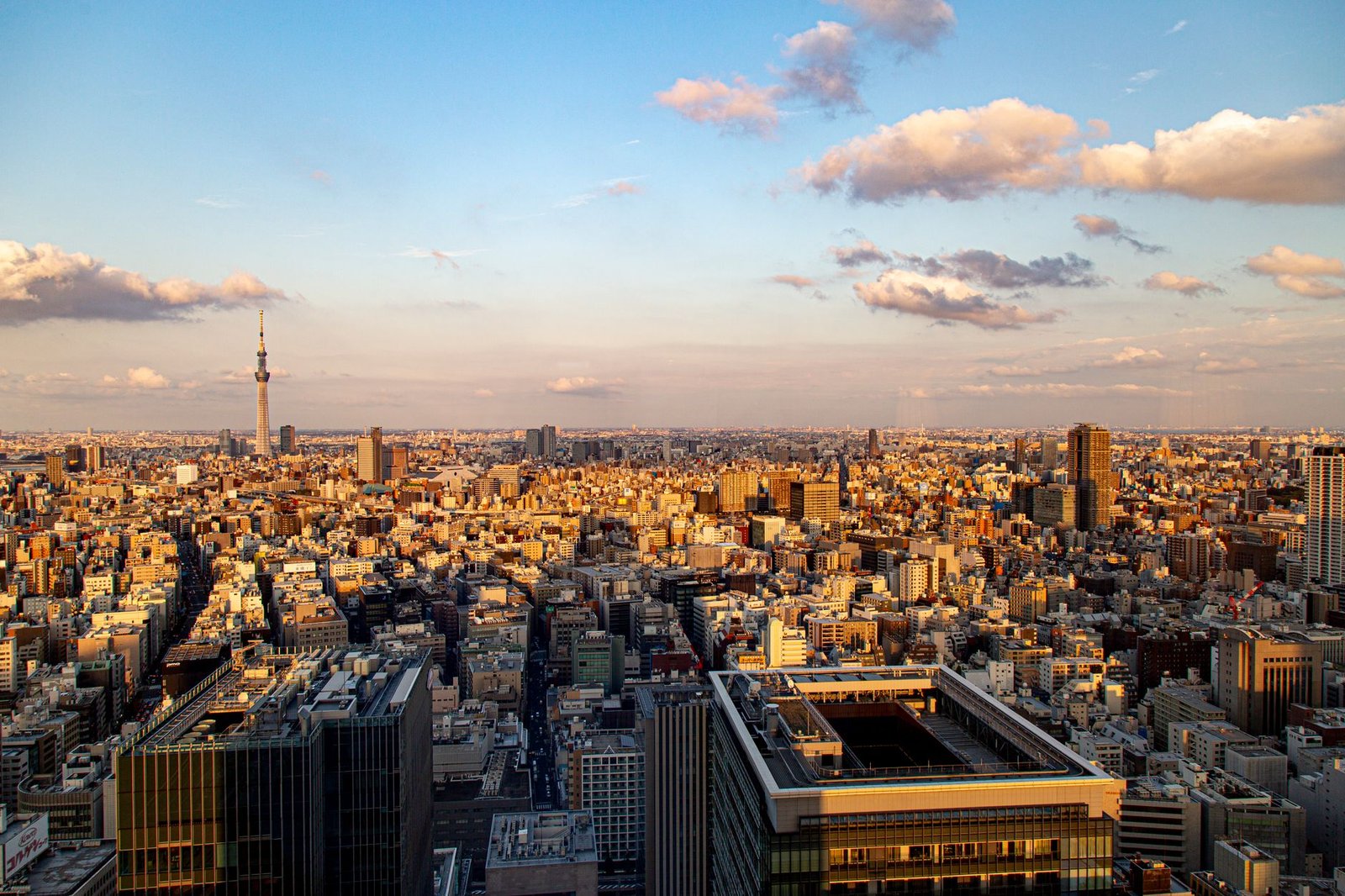
Tokyo has no single centre, so “central” is a useless word here. What decides your days is the line at your door and the number of changes between it and where you are going. Get it right and a five-day trip gains an hour a day. Get it wrong and you pay top-of-market rates to stand on platforms.
The short answer
Stay on the Yamanote loop, or one interchange from it. The loop runs 34.5km through 30 stations and a full lap takes about an hour, so no point on it is more than roughly 30 minutes from any other point on it. That single fact makes most of the district argument moot.
Shinjuku is the default: more lines than anywhere else in the city, and mid-table on price. Take Ueno or Asakusa if budget is the binding constraint. Take Tokyo Station or Shinagawa for bullet train day trips. Take Ginza for quiet evenings and expect to pay. Shibuya was the dearest area we priced and buys the least reach for the money.
| Area | Lines at the station | Median night, 11 Nov 2026 | Take it if |
|---|---|---|---|
| Shinjuku | Yamanote, Chuo, Sobu, Saikyo, Shonan-Shinjuku, Odakyu, Keio, Marunouchi, Toei Shinjuku, Toei Oedo | ¥25,344 | First trip, and you want to stop thinking about transport |
| Ueno | Yamanote, Keihin-Tohoku, Ginza, Hibiya, Keisei, three Shinkansen lines | ¥21,420 | Budget matters and you are arriving from Narita |
| Ikebukuro | Yamanote, Saikyo, Shonan-Shinjuku, Marunouchi, Yurakucho, Fukutoshin, Tobu Tojo, Seibu Ikebukuro | ¥22,000 | You want Shinjuku’s reach at Asakusa’s price |
| Asakusa | Ginza, Toei Asakusa, Tobu Skytree, Tsukuba Express | ¥22,824 | Old city, one-seat rides to Haneda and Nikko |
| Shinagawa | Yamanote, Keihin-Tohoku, Tokaido, Yokosuka, Keikyu, Tokaido Shinkansen | ¥28,431 | Haneda arrivals and westbound day trips |
| Tokyo and Marunouchi | Yamanote, Chuo, Keihin-Tohoku, Yokosuka, Keiyo, Marunouchi, six Shinkansen lines | ¥30,492 | Early departures and heavy rail use |
| Ginza | Ginza, Marunouchi, Hibiya | ¥35,197 | Quiet nights, short stay, no early trains |
| Shibuya | Yamanote, Saikyo, Shonan-Shinjuku, Ginza, Hanzomon, Fukutoshin, Tokyu, Keio Inokashira | ¥44,000 | You are here for the nightlife and will walk home |
What does a night actually cost, and how do we know?
No public survey breaks Tokyo hotel rates down by district, so we priced them ourselves. On 21 August 2026 we ran the same Booking.com search for each area: two adults, one room, hotels only, yen. We took the first 25 results each time and report the median and the middle half. Two dates, peak autumn and the low season after New Year, 400 quotes in total.
| Area | 11 Nov 2026 median | Middle half of sample | 20 Jan 2027 median | Change |
|---|---|---|---|---|
| Ueno | ¥21,420 | ¥19,475 to ¥25,300 | ¥16,775 | -22% |
| Ikebukuro | ¥22,000 | ¥16,456 to ¥22,860 | ¥15,840 | -28% |
| Asakusa | ¥22,824 | ¥21,420 to ¥39,144 | ¥16,913 | -26% |
| Shinjuku | ¥25,344 | ¥21,708 to ¥27,000 | ¥16,920 | -33% |
| Shinagawa | ¥28,431 | ¥21,845 to ¥37,700 | ¥18,620 | -35% |
| Tokyo and Marunouchi | ¥30,492 | ¥25,020 to ¥70,000 | ¥32,598 | +7% |
| Ginza | ¥35,197 | ¥30,263 to ¥60,840 | ¥29,055 | -17% |
| Shibuya | ¥44,000 | ¥34,380 to ¥55,486 | ¥28,080 | -36% |
The whole 200-property November sample had a median of ¥25,853 against ¥19,670 in January, so moving your dates out of peak season saves about a quarter, more than any change of district will. Shibuya’s median was double Ueno’s on the same night. Marunouchi was the only area that did not come out cheaper in January, which is what a 25-property sample looks like when it picks up a different set of luxury towers. Treat that row as noise.
For context, STR data carried by Nihon Keizai Shimbun put the Tokyo average at ¥33,168 in May 2026, up 12.8 percent on the year. That survey samples branded hotels, which is why it sits above our medians.
Why does the line matter more than the district?
Because the fare is flat and the interchange is not. A Tokyo Metro ticket costs ¥180 to ¥330 whatever the distance inside the network, and Toei runs ¥180 to ¥430, so distance is close to free. What costs you is walking between platforms at a station like Shinjuku, which handled a daily average of 666,809 boarding passengers on JR East alone in fiscal 2024. Two changes at that scale is fifteen minutes you did not plan for, twice a day.
So read the line list, not the neighbourhood name. An itinerary leaning on Asakusa, Ueno and Skytree wants a Ginza line address. One leaning on Shibuya and Harajuku wants the Yamanote or the Fukutoshin. For day trips the operator picks your base: Odakyu’s Hakone trains leave Shinjuku, Tobu’s Nikko services leave Asakusa, and the Tokaido Shinkansen calls at Shinagawa as well as Tokyo Station. Our Japan Rail Pass costing covers when those trips justify a pass.
Do not buy the Tokyo Subway Ticket by reflex. It costs ¥1,000 for 24 hours, ¥1,500 for 48 and ¥2,000 for 72, half price for children aged 6 to 11, and it does not cover JR. Tokyo Metro’s own break-even is six rides in 24 hours, and that assumes the ¥180 minimum fare. If your days are three subway rides and a Yamanote hop, a stored-value card is cheaper.
Which area suits which trip?
Shinjuku
Ten lines, two of them private railways that carry you out of the city without changing. It is the safest first-trip choice and it priced at ¥25,344, with a tight middle half of ¥21,708 to ¥27,000, so the business chains here are predictable. Avoid it if you want silence. The east side runs on entertainment traffic until the small hours, and the walk from the west-side towers back to the gates is a genuine ten minutes.
Ueno and Asakusa
The cheapest central beds we found, at medians of ¥21,420 and ¥22,824. Ueno is on the Yamanote and is the Skyliner terminus, so a Narita arrival is 41 minutes and one short walk. Asakusa is off the loop, but the Toei Asakusa line runs through onto Keikyu, which puts Haneda on a single train, and Tobu’s Nikko services start here. The trade is evenings: both areas empty out once the museums and temples close. Avoid them if your itinerary leans on Shibuya and Harajuku, 30 to 40 minutes away rather than 15.
Ikebukuro
The value pick most guides skip. Second busiest JR East station in the country at 499,128 daily boardings in fiscal 2024, eight lines including the Fukutoshin straight to Shinjuku and Shibuya, and a ¥22,000 median with the lowest bottom quartile on the loop at ¥16,456. Avoid it if nightlife districts worry you, because the FCDO names Ikebukuro alongside Kabukicho and Roppongi in its drink-spiking warning.
Shinagawa
A transport decision rather than a neighbourhood one. Keikyu reaches Haneda in 11 minutes for ¥330 and the Tokaido Shinkansen stops here, so westbound day trips start without crossing the city first. The ¥28,431 median sits above Shinjuku, which is the premium for that. Avoid it if you want to walk to dinner, because the station is ringed by office towers. Our airport transfer costing has the full Haneda and Narita numbers.
Tokyo Station and Marunouchi
Six Shinkansen lines under one roof, plus the Keiyo line for Tokyo Disney Resort. Worth the ¥30,492 median only if you are taking three or more long-distance trains. Avoid it otherwise: it is a business quarter, and the price band is bimodal. The middle half stretched from ¥25,020 to ¥70,000, so you are in a budget aparthotel or a palace hotel with little in between.
Ginza
Three subway lines and no JR, which is the catch. Ginza is quiet at night because the stores shut and the offices empty, and that is the reason to be here. At a ¥35,197 median it was the second dearest area we priced, and the walk to JR at Yurakucho or Shimbashi adds five to ten minutes to every airport run. Take it for two or three nights with no early flight, not for a packed first trip.
Shibuya
The most expensive area in our sample at a ¥44,000 median, more than twice Ueno for the same night. The connections are good rather than exceptional, and the station rebuild still means long underground walks between the Yamanote and the Fukutoshin. The case for paying it is narrow: you intend to be out past the last train and want to walk back rather than pay a night taxi.
Where should you not stay?
Anything sold as “Tokyo” that sits at Narita. Those hotels are 60km out and the cheap fare in is ¥1,030 on a 75-minute local. The nightly saving does not survive two of those journeys.
Kabukicho, specifically, rather than Shinjuku generally. The UK Foreign Office reports increased drink spiking and credit card fraud in Tokyo’s entertainment districts and says most British victims were targeted in Kabukicho. Its instruction is blunt: do not follow street touts into bars. Staying two streets out costs nothing and removes the walk home through the touts.
Odaiba and the bay reclamation. The views are real and so is the isolation, because almost everything runs through the Yurikamome, one automated line with a change at Shimbashi or Toyosu to reach anywhere else.
Anywhere more than about ten minutes’ walk from a station. Trains stop between roughly 23:30 and 00:30 and restart around 05:00, and that walk becomes the whole problem at the end of a night out.
The traps that cost money
The accommodation tax is charged per person per night and is increasingly quoted separately from the room rate. Tokyo exempts rooms under ¥10,000 per person per night, charges ¥100 from ¥10,000 to ¥14,999 and ¥200 above that. Sotetsu Hotels moved to tax-exclusive pricing for stays booked from 1 March 2026, in Kyoto and Osaka as well. The sums are small. The point is that a quoted rate is no longer the final rate at every chain. It is not the earning rate either, because hotel loyalty schemes pay points on the room and not on the tax.
It is about to get bigger. The Tokyo Metropolitan Government’s published draft replaces the flat charge with 3 percent of the room rate, raises the exemption to ¥13,000 per person per night and extends the tax to private lodgings and capsule hotels. Press reports say the Internal Affairs Minister approved it on 1 July 2026 for an April 2027 start. On a ¥30,000 room that is ¥900 a person a night instead of ¥200.
Missing the last train is the expensive mistake. Tokyo taxi fares were revised on 20 April 2026 to ¥500 for the first kilometre, then ¥100 per 232 metres, with ¥100 added per 85 seconds below 10km/h and a 20 percent surcharge from 22:00 to 05:00. Shibuya to Ueno at 1am runs well past ¥5,000. That arithmetic justifies Shibuya rates if you plan late nights there, and condemns them if you do not.
Room size is not a category. Japanese business hotel doubles routinely run 13 to 16 square metres, and the bed is often a small double. The listing states the floor area, so read it before you book two adults and two large cases into 13 square metres.
Take cancellable rates on a first trip. Rates move a long way between seasons, and a non-refundable booking made months out leaves you no way to act on that. If a hotel resells your room anyway, our guide on what to demand when a hotel walks you sets out the ground rules.
Frequently asked questions
Is Shinjuku or Shibuya better for a first trip?
Shinjuku. More lines, Shibuya reachable in about seven minutes on the Yamanote, and it priced ¥18,656 a night below it in our November sample. Over four nights that is ¥74,624.
Should I move hotels partway through a Tokyo trip?
No, for anything under a week. A full lap of the Yamanote is about an hour, so no base is more than roughly 30 minutes from another part of the loop. Moving costs a morning, two check-ins and a luggage problem.
Is it cheaper to stay outside the Yamanote loop?
Yes, and usually a bad trade. Subway fares barely rise with distance, so the saving is real, but you buy it in changes and last-train pressure. The exception is a long stay, where the nightly gap compounds and you settle into one line.
When are Tokyo hotels cheapest?
January and February. Our January sample came in 24 percent below the November one. The cost is weather and short daylight, not closures, because Tokyo’s museums and restaurants run all winter.
Is the Tokyo Subway Ticket worth buying?
Only above six subway rides a day, Tokyo Metro’s own stated break-even at the ¥180 minimum fare. It excludes JR, so a Yamanote base means splitting travel across two systems and paying twice.
Sources: Tokyo Metropolitan Government Bureau of Taxation, Review of the Accommodation Tax (Overview of Draft), November 2025; Sotetsu Hotels on tax-exclusive pricing from 1 March 2026; Japan Today on ministerial approval and the April 2027 start; the Tokyo Metropolitan Government’s Go Tokyo guide on subway fares and operating hours; Tokyo Metro on Tokyo Subway Ticket prices and its break-even; Kokusai Motorcars on the taxi tariff effective 20 April 2026, following the Kanto District Transport Bureau notice of 19 March 2026; JR East station passenger data for fiscal 2024; the UK Foreign, Commonwealth and Development Office on safety in Japan; and STR data on Tokyo hotel rates as reported by Nihon Keizai Shimbun. Nightly rates are our own sample of 400 Booking.com quotes taken on 21 August 2026.
Researched from primary sources and checked August 2026. General information, not advice.
